The Decision Experiment
Why does the same AI tech pay off at one company and stall at another? The answer is human judgment at scale.
Same AI. Different People. Different Results.
You own the decision.
Make the call.
- $11T+
- in central bank assets in one room she led
- 25,000+
- people reached from the stage
- 11,000+
- learners in her LinkedIn Learning courses
- 5 min
- until the whole room is in the experiment
Cheap to make.
Expensive to decide.
AI now produces in seconds what used to take weeks: drafts, analyses, code, plans. When making the work is cheap, the expensive part is deciding what to trust, change, and act on, and those decisions now happen at every level of the organization.
Every organization can buy the same AI. The best results come from teaching people to make high-quality human + AI decisions.
What happens live
- Everyone decides. A real AI decision from your industry, on their phones, in the first five minutes.
- The results appear on the big screen. People look around. Same facts. Same AI. Yet their colleagues made completely different calls.
- The reveal. Dr. Lisa shows the human decisions behind the differences: what people ask, trust, challenge and change.
- The takeaway. Your audience leaves with practical habits for deciding with AI, and your team gets the post-event report-out.
What your event gets
For your audience
- 01
They see their own fingerprints on AI results.
What they ask, trust, challenge, and change shapes every output, and they watch it happen live.
- 02
They make better calls with AI on Monday.
Practical habits for the next time AI hands them an answer: what to question, what to trust, and when to push back.
- 03
They keep talking about where they landed.
A shared experience that gives teams a common language for deciding with AI.
Why event teams book it
“Will my audience tune out?”
Not this time.
The audience becomes part of the keynote. They make the call, see how their colleagues decided, and discover something about how they think.
“We’ve already had an AI talk this year.”
This one is about your people, not the technology.
Built for your industry, from banking, insurance, and construction to public power, cybersecurity, HR, and sales teams. Don’t see yours? Dr. Lisa builds a scenario for your audience. It lands with a mixed room, frontline to C-suite.
“Will it fit our agenda?”
It’s built to drop in.
Leadership meetings, executive summits, association meetings, partner conferences, and sales kickoffs. Program copy is ready to paste below.
INCLUDED WITH EVERY KEYNOTE
Pre-event assessment
A three-minute decision-style assessment so the keynote runs on your attendees’ own answers.
Executive report-out
A 30-minute call with your executive sponsor on how your audience decides with AI.
CE-ready
Learning objectives and an outline for continuing education submission.
Book signing
When you order copies of Show AI—Don’t Tell It.
The continuous polling throughout your presentation was brilliant and kept folks engaged.
Lisa has done it all when so many are trying to.
For sales kickoffs
Running a sales kickoff?
AI is already in every rep’s workflow: scoring deals, researching accounts, drafting outreach. Whether they trust it, question it, or override it decides the number. Dr. Lisa has sat on both sides of the table, buying technology as a CIO and selling it as a Microsoft and Splunk executive, and she brings both to your stage.
Recent sales stages: Seismic City Tours · Sales Success Summit
“Unbelievably fantastic! Dr. Lisa named something I’ve lived but never heard anyone talk about: buyers making decisions in private communities long before a seller shows up. I read and listen to everything in this space, and this isn’t coming through any other channel. I took notes like crazy and walked away energized.”
Keynote fee: $25,000 plus travel. Virtual: $15,000.
Try the experiment →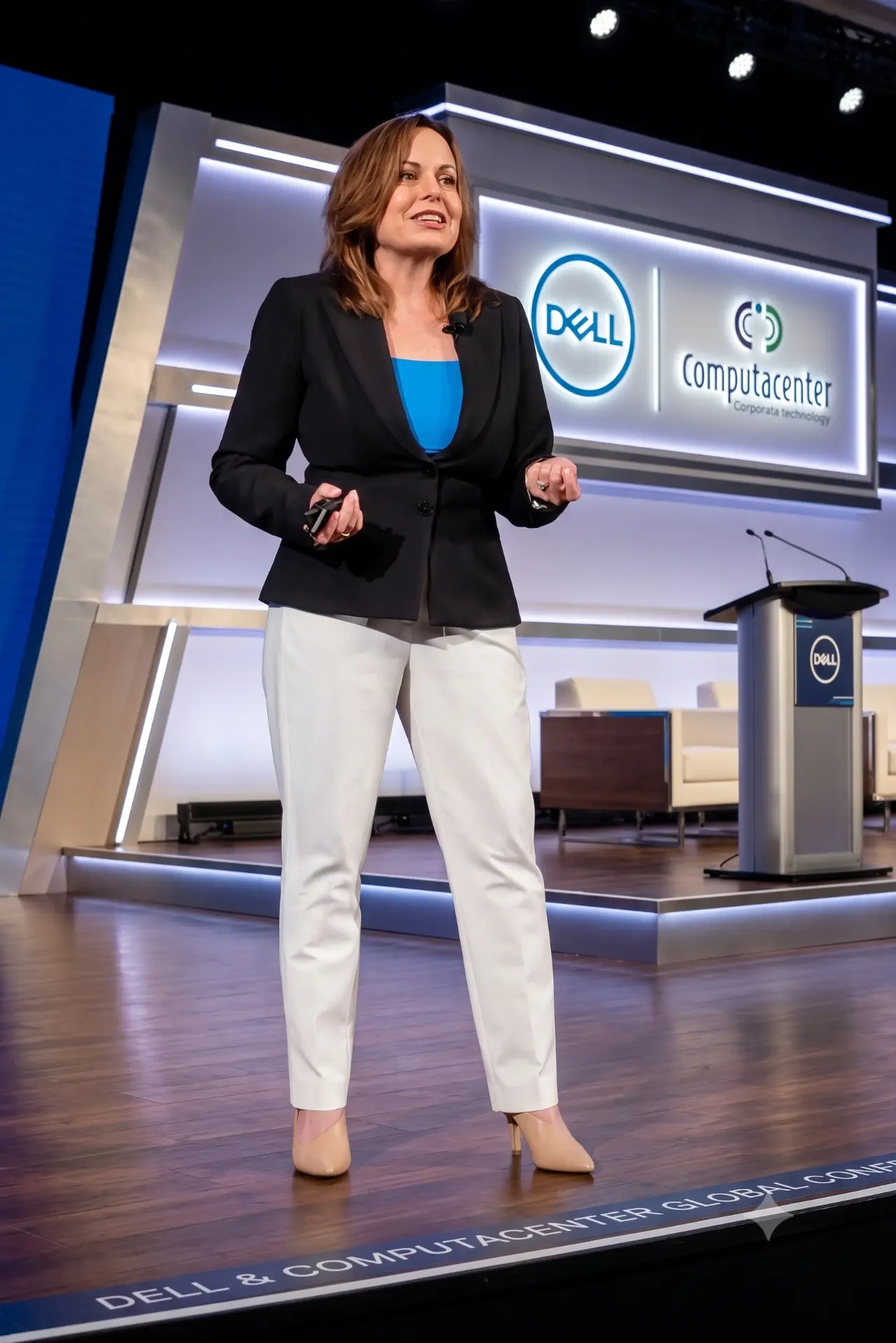
Proof
She put 36 central bank CIOs hands-on with AI at the Bank for International Settlements in Basel, Switzerland, then led them in deciding which AI risks to tackle together.
Invited by the CIO of the US Federal Reserve.
Former CIO, Gartner VP, Microsoft and Splunk executive, board director, and author of Show AI—Don't Tell It (Wiley, 2026).
She bought it, sold it, governed it. Now she builds with it every day as founder and CEO of AI-native Neurocollective.
Selected stages and clients




Keynote topics
- The Decision ExperimentFlagship, interactiveSame AI. Different people. Different results. A live audience experiment that works for any audience.
- AI-Powered Sales EnablementFor revenue leaders and sales kickoffs: how AI changes the buyer, the seller and the enablement playbook.
- When AI Mistakes Are Expensive: Trust, Risk and Human JudgmentFor CIOs, CISOs, boards and regulated industries: why AI risk is mostly a people problem (over-reliance, judgment and accountability) and how leaders get it right.
Event planner kit
Everything you need to promote and run The Decision Experiment.
Promote it
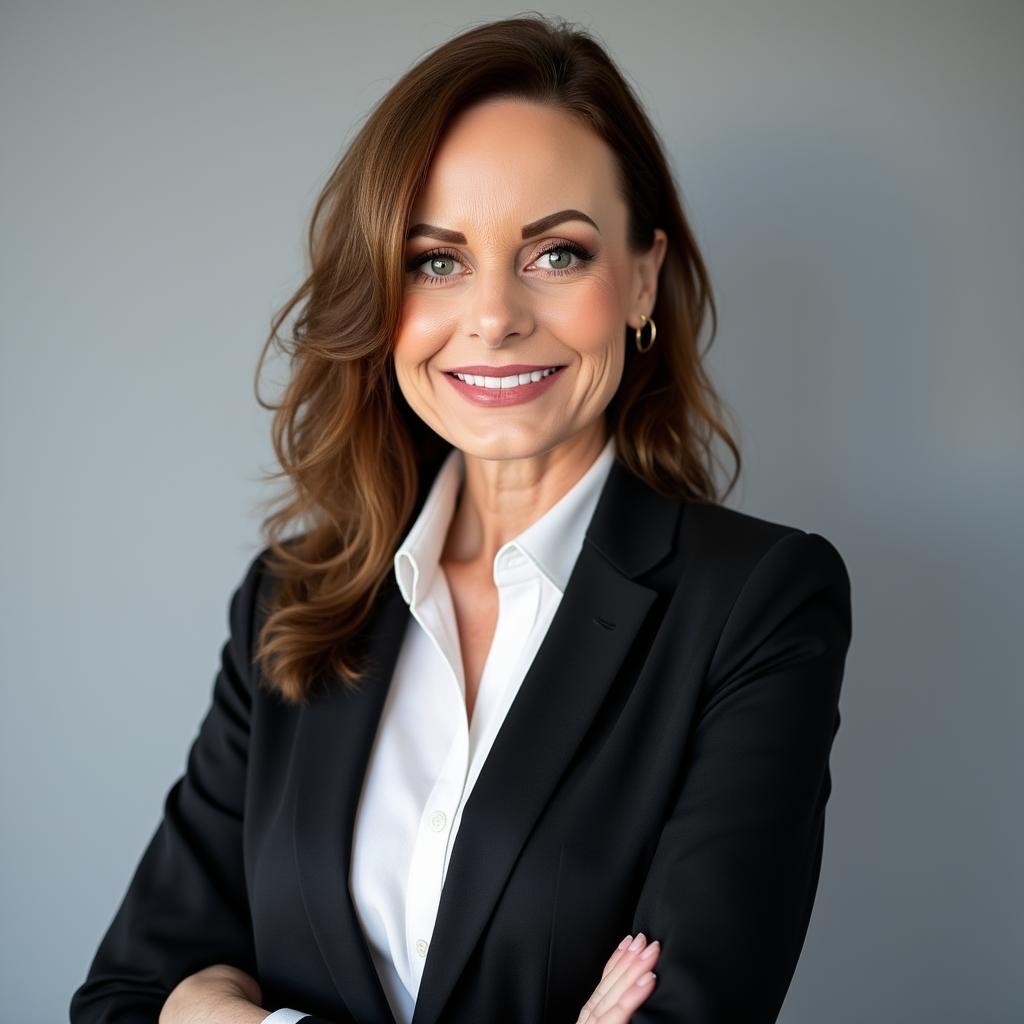
Photos
Headshots and a stage photo for print and promotion. Headshots are AI-assisted.
Tap a photo to download.
Preview video
A 20-second look at how the experiment runs. Video creation AI-assisted.
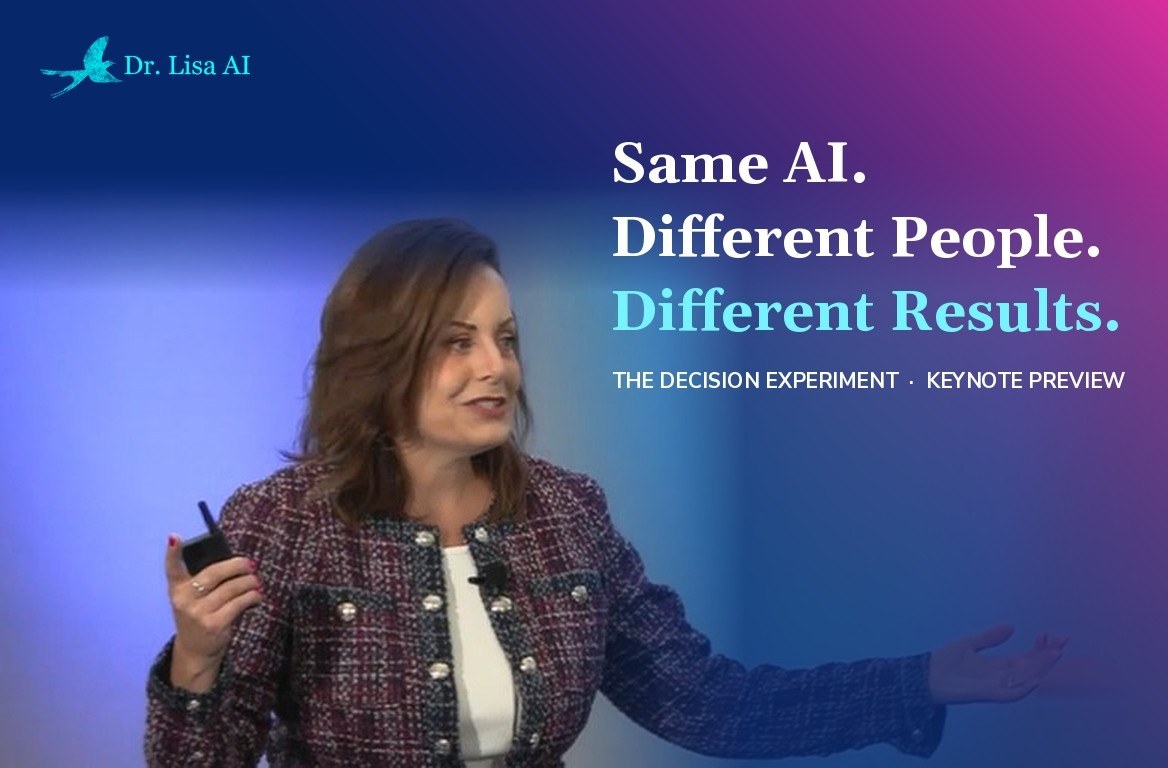
Tap the video to download.
Promotion post
Announce the keynote on LinkedIn or in your event emails.
Same AI. Different people. Different results. At our event, Dr. Lisa Palmer will show us why, and every one of us will be part of the experiment. Want a preview? Try it yourself: drlisa.ai/keynote?e=promo
Watch Dr. Lisa live



Introduce Dr. Lisa
Program description
Ready to paste into your agenda and attendee emails.
The Decision Experiment
Dr. Lisa Palmer's Signature Interactive Keynote
Same AI. Different People. Different Results.
Why does the same AI tech pay off at one company and stall at another? The answer is human judgment at scale.
In the first five minutes, everyone in the audience makes the same AI-powered business decision from their phone. Seconds later, the results appear on the big screen, and a shared a-ha happens: same AI, same facts, very different calls.
What happens next reveals something every leader needs to understand: The technology may be the same, but human judgment determines what organizations accomplish with it.
Dr. Lisa Palmer—former CIO, Gartner VP, Wiley author, and AI advisor to executives worldwide—uses the live results to show the human decisions that shape AI outcomes. Drawing on her doctoral research and executive experience, she shows how people influence AI through what they ask, trust, challenge, change, and ultimately put into action.
Audiences leave with a new understanding of their own role in AI success, practical ways to improve decisions, and a shared experience that sparks conversations long after the event.
The AI advantage your competitors can't buy is the judgment of your people.
Speaker bio
Short bio for your program and website.
Dr. Lisa Palmer is focused on making complicated things simple and useful. She has bought, sold, advised on and governed AI: as a CIO, as a go-to-market executive at Microsoft and Splunk, as Gartner's VP of Executive Programs and as a board director. Now she builds with it every day as founder and CEO of Neurocollective, an AI-native company. She holds a Doctorate in Artificial Intelligence (2023), led a hands-on AI lab for central bank CIOs from 36 countries in Basel, Switzerland, and is the author of Show AI—Don't Tell It (Wiley). She has spoken to audiences from boardrooms to 15,000-seat arenas and has been featured by NBC, ABC, CBS, Fox News, Forbes, CIO and the Financial Times.
Emcee introduction
A 30-second intro your host can read word for word.
Our next speaker has bought AI as a CIO, sold it as a Microsoft and Splunk executive, advised on it as a Gartner VP and governed it as a board director. Today she builds with it every day as founder and CEO of Neurocollective. She recently put 36 central bank CIOs hands-on with AI at the Bank for International Settlements in Basel, Switzerland. Get your phones out, because in the next five minutes, every one of you becomes part of the experiment. Please welcome Dr. Lisa Palmer.
Get it approved
Speaker one-sheet
One page for your team or sponsors.
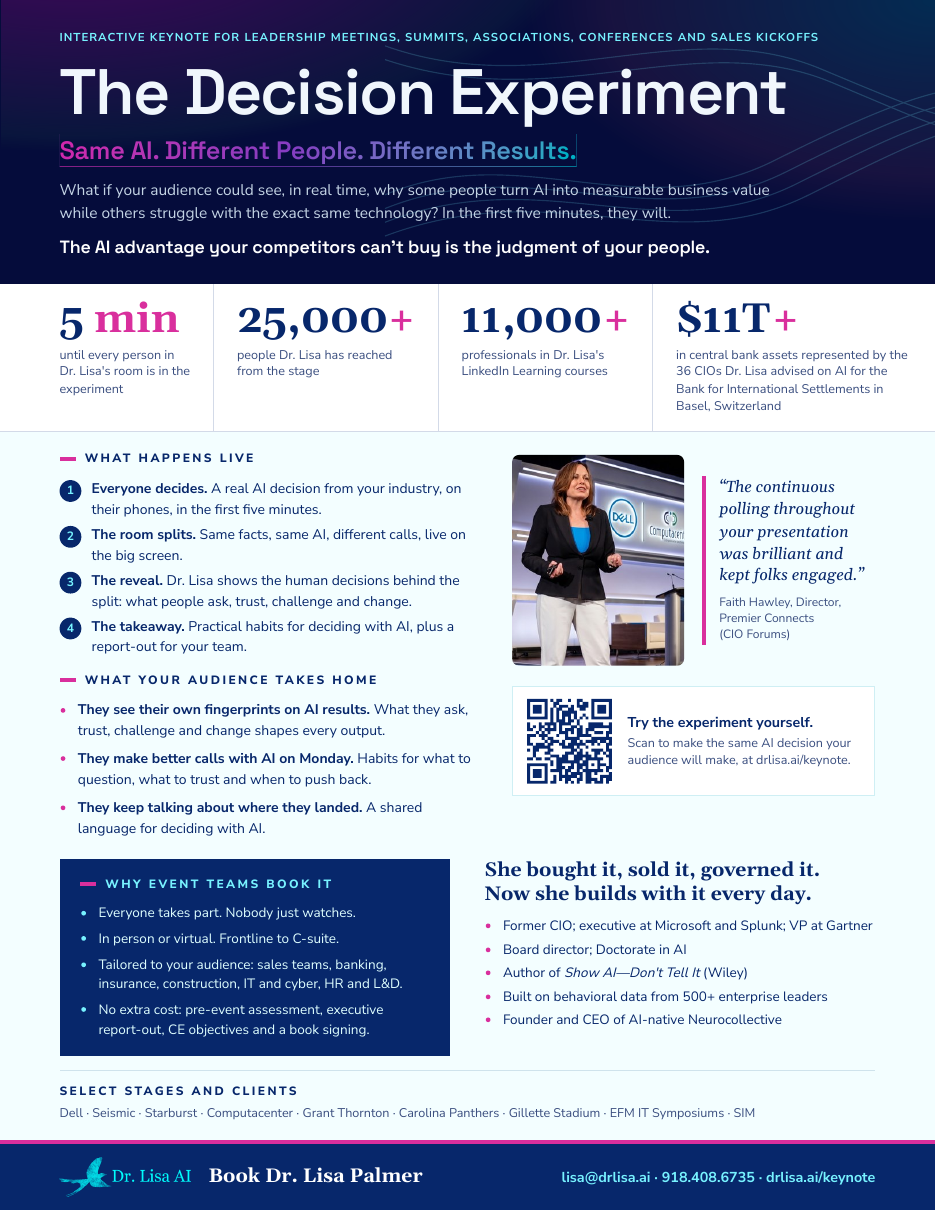
The bureau version has no contact details, ready to forward to your client.
Learning objectives
Objectives and credit details for continuing education submission.
Commonly submitted for:
- SHRM
- HRCI
- ATD
- PMI
- NASBA CPE
- ISC2
- ISACA
- CompTIA
- PDH
Credit eligibility confirmed by your host or credentialing body.
The Decision Experiment: Learning objectives
After this session, participants will be able to:
1. Compare their own decision on a live, AI-supported business scenario with their peers' decisions, and explain why the same AI and the same information produced different choices.
2. Identify where their own choices shape AI-assisted outcomes: what they ask, what they trust, what they challenge and what they change.
3. Apply a short set of checks to decide when to accept, question or override an AI-generated recommendation in their own role.
A timed session outline for CE submission is available on request.
Session details
Level: Basic. Prerequisites: None. Advance preparation: None (a three-minute pre-event assessment is optional).
Delivery: Group live or group internet-based, with live interactive polling throughout.
Credit hours: 1.0 for most credentialing bodies (up to 1.2 CPE under NASBA's 50-minute standard).
Credit by audience (the host or attendee confirms eligibility):
HR and L&D: SHRM PDCs and HRCI credits (host-filed); ATD CPTD/APTD (self-reported).
Finance, banking and accounting: NASBA CPE, Information Technology field; CFMA for construction finance.
IT and project leaders: PMI PDUs (Power Skills), CompTIA CEUs, ISACA CPE (self-reported).
Security: ISC2 CPE, Group A when delivered with the cybersecurity scenario, Group B otherwise (self-reported).
Engineering, construction and utilities: PDH for licensed engineers (self-reported).
Insurance: state CE when the host is an approved provider.
Dr. Lisa's LinkedIn Learning courses are eligible for ISC2 CPE and PMI PDUs, through LinkedIn Learning.
What the room needs
- Attendees' phones (browser only, no app)
- Reliable wifi or cell coverage
- A screen everyone can see
- A wireless lavalier mic
- A laptop connection to the projector